

New Report: Learning Mission to the 2026 Milano Cortina Winter Olympic Games
New Report: Learning Mission to the 2026 Milano Cortina Winter Olympic Games
Exploring a future Olympic and Paralympic Games for Cape Town, the Western Cape and South Africa
Cape Town 2040 is exploring the opportunity of a future Olympic and Paralympic Games in Cape Town, the Western Cape and South Africa.
Inspired by the IOC’s Agenda 2020+5, we examine how the Games could align with our long-term development plans, strengthen sustainability, and advance inclusion benefiting our communities, towns, cities and country.
Our work brings together ideas, research and engagement, in collaboration with academics, experts, practitioners and students. We welcome input from people and organisations, shaping the Games to fit our region, not the other way round.
Our Research
Access and download the reports and learning outputs produced to date as part of Cape Town 2040.
-
Milano Cortina 2026 Winter Olympic Games: Learning Mission Report
We embarked on a learning mission to the Milano Cortina 2026 Winter Olympic Games, and this report reflects on key insights and opportunities for Cape Town from one of the most distributed and locally-adapted Olympic Games to date.
Download the report here
-
-
We embarked on a learning mission to the Paris 2024 Olympic Games, and this report reflects on key insights and opportunities for Cape Town from one of the most sustainable and city-integrated Olympic Games to date.
-
This study considers Games-time accommodation requirements and considers how these could be met in ways that align with long-term housing neeeds and development objectives for Cape Town and the region.
-
This report presents baseline data on how a potential future Olympic and Paralympic Games could align with national, provincial, and local long-term development plans.
Download the report -
This report provides baseline data on current and planned transport infrastructure in Cape Town and the Western Cape, relevant to a potential future Olympic and Paralympic Games.
-
The development of an initial Games masterplan including all venues, the Olympic Village(s), IBC and MPC.
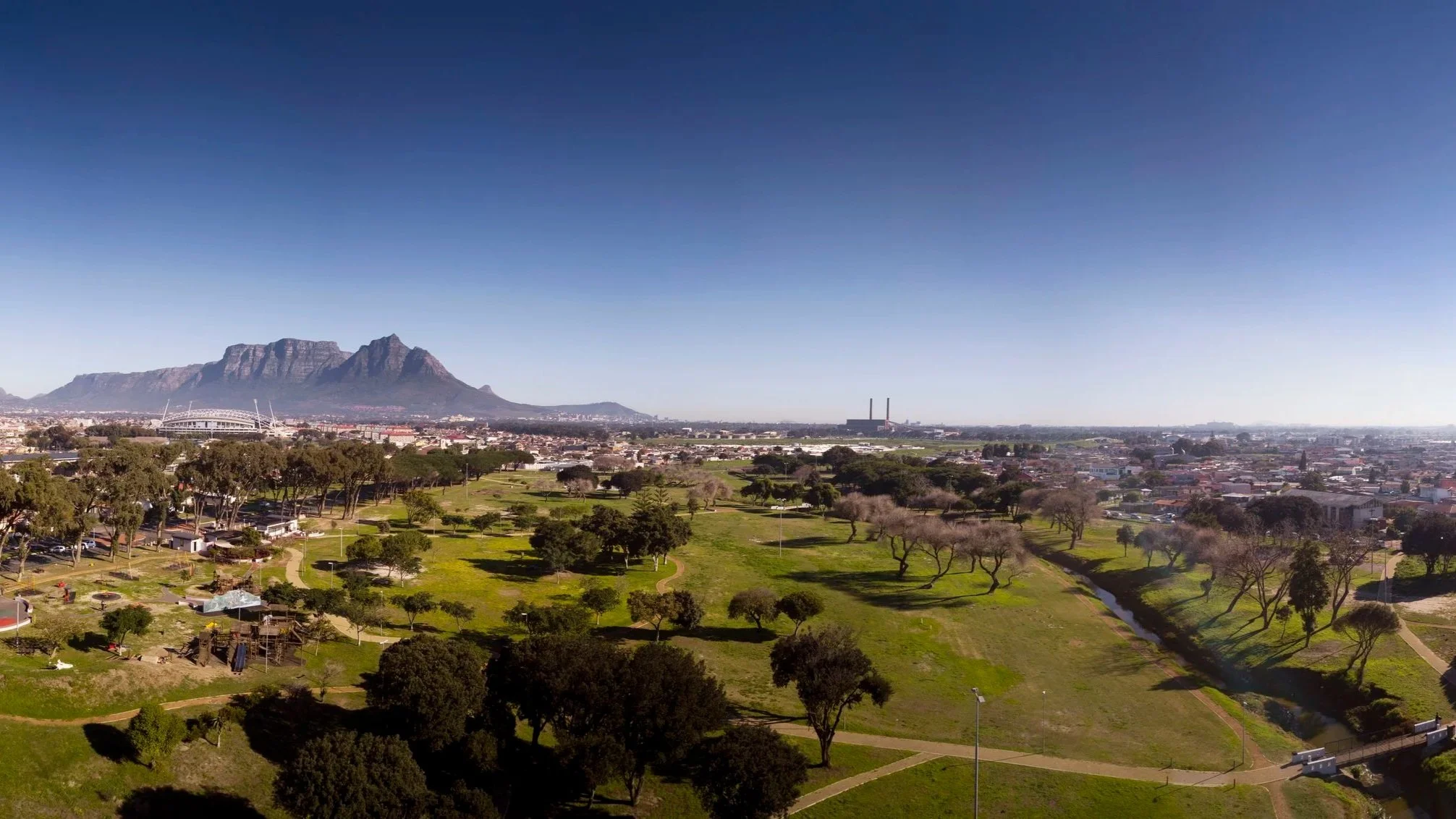
An opportunity to build a vision
and a sustainable model for
the Games in the Global South.

Media Coverage
How a modern Olympic Games could work for South Africa - Business Day
2036 Olympic Games: Cape Town dreams of being Africa's first host city (Jeux Olympiques 2036 : Le Cap se rêve en première ville hôte d’Afrique) - L’Équipe (France)
JO 2040 : Le Cap pourrait s’appuyer sur 84 % de sites existants ou temporaires - Sport & Société (France)
Shaping Cape Town’s Urban Transformation through Hosting the Olympic Games - Rashiq Fataar on the Africa Business of Sport Podcast
Sascoc expresses interest in hosting the 2036 Olympics, but can South Africa afford it? - Daily Maverick
Why Cape Town should host the 2040 Olympic Games - Our Long Walk
Guy Briggs on John Maytham’s Afternoon Drive Show - Cape Talk
After the Bell: Hosting the Olympics and a devil on my shoulder - Daily Maverick
Cape Town eyes hosting the Olympic Games - Eyewitness News
How ready is Cape Town to host an Olympic Games? - Guys Briggs on CapeTalk Breakfast
Future Cape Town, urbanism and the Olympic dream -
Rashiq Fataar on Moneyweb, The Property Pod

Frequently Asked Questions
Here are answers to some of the questions we are often asked about CT2040 and the Olympic Games.
Connect with us to learn more and contribute. Email us at hello@capetown2040.com
-
Cape Town 2040 is a think tank exploring the opportunity of a future Olympic and Paralympic Games in Cape Town, the Western Cape, and South Africa. Inspired by the IOC’s Agenda 2020+5 reforms, we examine how the Games could align with long-term development plans, strengthen sustainability, and advance inclusion—benefiting our communities, towns, cities, and country. Our work brings together ideas, research, and engagement in collaboration with academics, experts, practitioners, and students.
-
The initiative is co-convened by Rashiq Fataar (Our Future Cities) and Guy Briggs (dhk Architects). We collaborate with academics, practitioners, international experts, and students, including engagements with UCT architecture students and student design competitions.
-
South Africa is currently in an exploratory, non-binding phase with the IOC. In November 2024, the IOC publicly confirmed it welcomed South Africa’s interest and noted the country as an “Interested Party” for 2036. In November 2025, Cabinet approved South Africa entering Continuous Dialogue with the IOC as part of its intention to bid for 2036 or 2040. This is not a formal bid and it is not a host selection. CT2040 contributes independent, public-interest research to help inform what a future Games could mean and what it would require.
-
Agenda 2020+5 is the IOC’s plan, adopted in 2021, to modernise how the Olympic Games are delivered. It responds to concerns about escalating costs, complexity, and sustainability. The reforms prioritise using existing facilities, limiting unnecessary new construction, and designing Games investments so they deliver long-term public benefit.
-
Agenda 2020+5 shifts the Olympics away from a rigid, one-size-fits-all approach and towards a model tailored to each host’s context. Hosts are encouraged to use existing venues wherever possible, build temporary or modular facilities where needed, and spread events across a wider region to reduce cost and risk. In short, the Games should fit the city and region, not the other way around
-
2036 is the first possible window, but 2040 is a practical reference point for the scale of transformation required. It reflects the time needed to close major transport gaps, unlock housing delivery at scale, and build safer, more walkable public environments. Our work remains relevant for any future cycle, including 2036, 2040, or 2044, because the test is not the date. The test is whether the city and country are building what residents need for the long term.
-
CT2040 has begun building a practical evidence base through studies and collaborations, including:
Sports Venues Assessment: An audit of competition venue requirements and what already exists locally (with a clear preference for existing and temporary solutions).
Learning missions and case-study research: How recent hosts have used modular venues and avoided “white elephants”.
Early accommodation and legacy thinking: How event-time needs could convert into long-term housing and student accommodation outcomes.
-
We assess the Games as a potential delivery accelerator for priorities that already matter to residents, including public transport upgrades, affordable housing and student accommodation, safer streets, and better public spaces. The strategic test is simple. If a project only makes sense for two weeks, it should not be pursued. If it strengthens the region for decades, it belongs in the discussion.
-
The IOC typically expects a host to guarantee around 41,000 rooms for Games stakeholders.
A common response is to rely heavily on short-term fixes, such as cruise ships, or to encourage large amounts of new hotel development that may not be needed after the event.
Our approach, consistent with Agenda 2020+5, is to treat accommodation as a legacy lever. The Accommodation Assessment explores meeting Games-time needs while planning for conversion to permanent supply afterwards, including 10,000 to 12,000 long-term homes, 5,000 to 8,000 new university beds, and the conversion of a media village into affordable and gap housing where it is most needed.
This would not solve the housing crisis on its own. For context, the Western Cape housing backlog has been reported at around 620,000 units, with the majority of demand concentrated in Cape Town, and Cape Town itself has reported more than 400,000 applicants on its housing database. -
The Olympic Games are funded through two separate budgets.
The event itself is privately financed.
The operating budget that delivers the Games — staffing, venues operations, ceremonies and security — is funded mainly through global broadcast rights, IOC sponsorship programmes, domestic sponsors and ticket sales. It is designed to break even.Long-term infrastructure is separate.
Projects such as housing, transport or permanent facilities are not paid for by the Games budget. They should only proceed where they meet genuine development needs and have sustainable funding. Under current IOC reforms, infrastructure that is not aligned with long-term plans must be temporary, removable or not built at all. -
2010 showed that South Africa can deliver major, deadline-driven projects, and that the real measure of success is what still serves residents afterwards. In Cape Town, this includes the MyCiTi BRT, which has since attracted over R10 billion in investment, upgrades to Cape Town International Airport, the renovation of Cape Town Station, and improvements to venues including Athlone Stadium and Philippi Stadium. It also proved the value of people-first public space through the Fan Walk, a safe pedestrian route that reconnected people to the city. The takeaway is straightforward. A major event can be worthwhile when it speeds up infrastructure the city needs anyway, especially transport and safe, walkable streets.
-
No. That is an outdated assumption. Under the IOC’s current approach, hosts are expected to maximise existing venues and use temporary facilities where appropriate. New permanent builds should be limited to clear, long-term community needs, not event spectacle. Our 2024 audit indicates that 84 percent of required venues already exist or can be temporary. We only propose new permanent construction for roughly 16 percent of venues, approximately six facilities, where there is a clear community need, such as international-standard swimming pools or indoor arenas that local athletes and youth currently lack.
-
No. Cape Town is the anchor host city, but the concept is designed to work across the city-region and wider Western Cape, and where it strengthens feasibility and legacy, across South Africa and potentially Southern Africa. The IOC’s reforms allow hosts to use existing venues and spread events across regional hubs rather than concentrating everything in one tight radius. In practice, that could include Jeffreys Bay for surfing, Soccer City for major football matches, and regional hubs such as Stellenbosch and Paarl for sports that fit existing facilities and logistics. This approach reduces pressure on any single precinct, supports multiple smaller athlete villages or accommodation hubs closer to venues, and helps ensure that benefits such as upgrades, jobs, skills, and visibility reach more communities.
-
Cape Town 2040 is an open platform. We welcome research input, expertise, and collaboration from organisations, practitioners, and students. If you would like to contribute or partner, contact us at hello@capetown2040.com
-
The work is not wasted. Research into housing backlogs, transport gaps, and sports facilities is valuable for Cape Town’s and South Africa’s growth regardless of any mega-event. It helps clarify what needs to be fixed, prioritised, and funded, whether or not a Games ever comes to our shores.
Collaborations
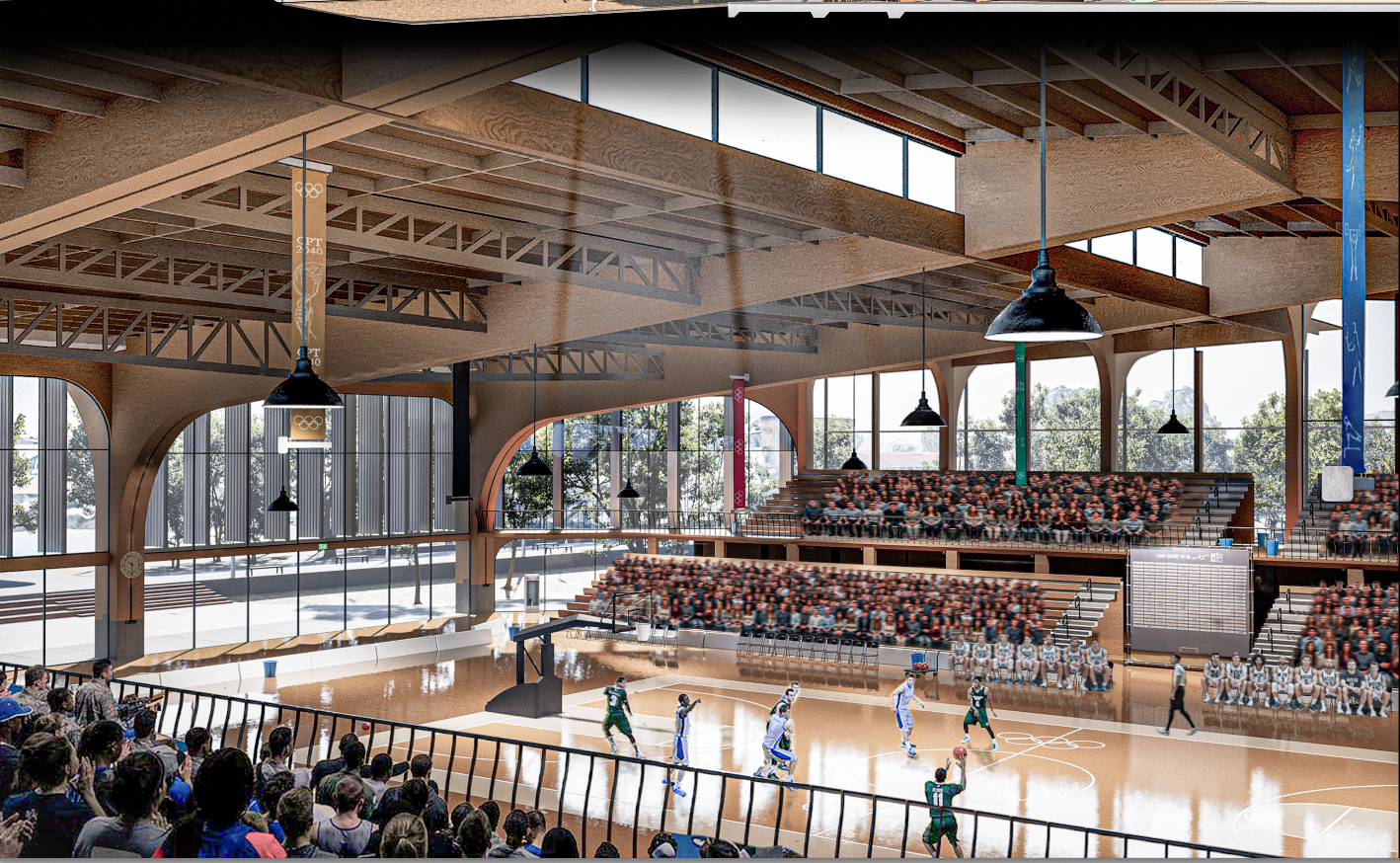
UCT Architecture Studio for Olympic Indoor Arena in Athlone
Together with Thomas Chapman and third-year UCT Architecture students, Cape Town 2040 explored design concepts for a 7,000-seat arena in the Vygieskraal Precinct. The top proposals were submitted to the 2025 IOC IAKS Architecture and Design Award.
See the top designs here
Caesarstone Student Design Competition 2024
CT2040 developed the brief for students to create a conceptual and functional community centre to support Olympic urban sports in Nantes Park, Athlone.
Watch the awards ceremony here